


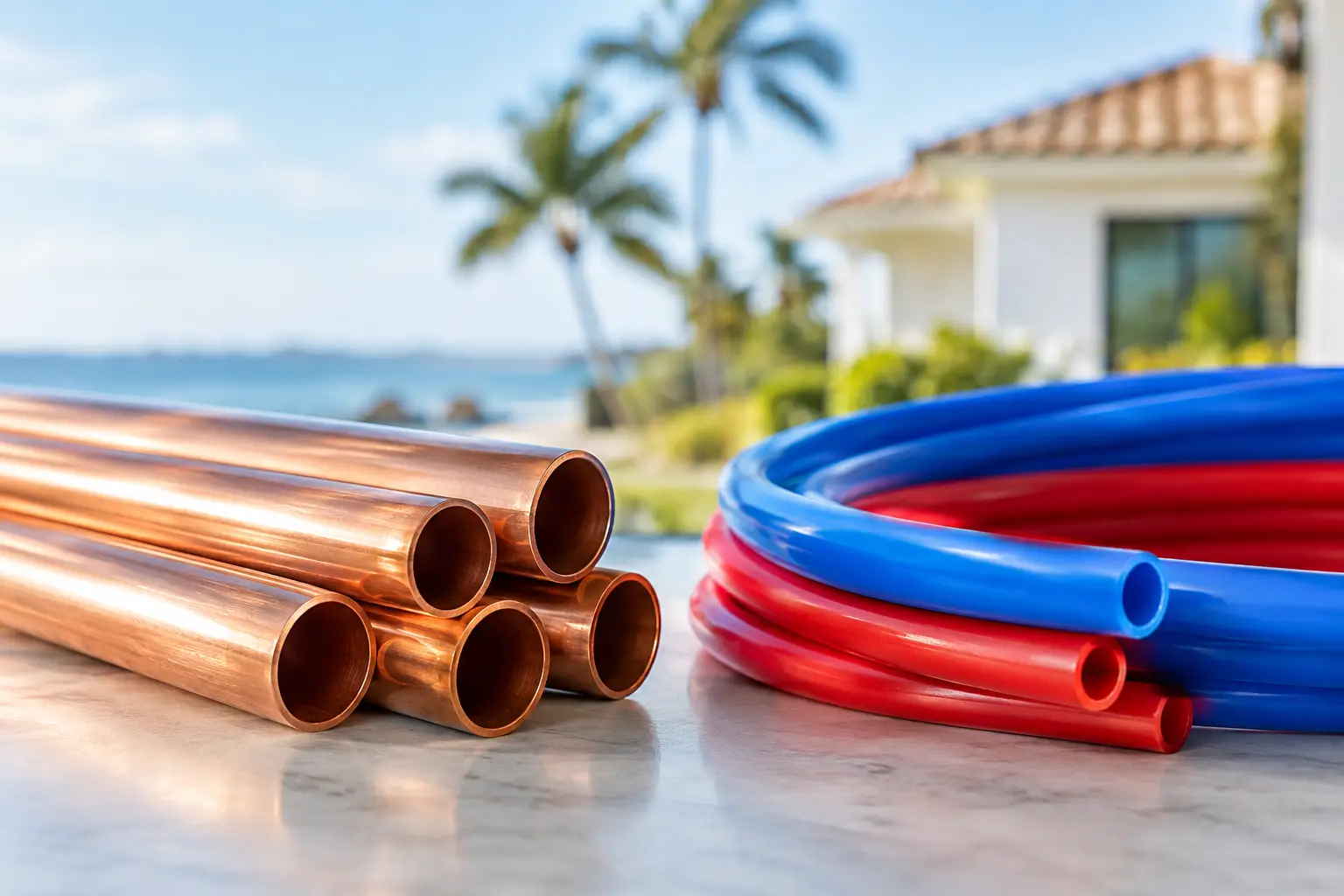
A small leak behind a wall can turn into a much bigger question: when that pipe is repaired or replaced, should it be copper or PEX? In the copper versus PEX decision, there is no one material that wins in every home. The right answer depends on the age of your plumbing, the condition of the existing lines, your water, the scope of the work, and what you want from the repair long term.
For homeowners in Tamarac and across Broward County, the choice often comes up during leak repairs, bathroom renovations, water heater replacements, or whole-home repiping. Both materials are widely used in residential plumbing. Both can provide dependable service when installed correctly. The differences are in how they handle heat, movement, water conditions, installation, and cost.
Copper Versus PEX: The Main Difference
Copper is a rigid metal pipe that has been a familiar part of home plumbing for generations. It is joined with fittings and is commonly used for water supply lines. PEX, short for cross-linked polyethylene, is a flexible plastic tubing designed for hot and cold water distribution inside a home.
Copper has a long track record and a solid, permanent feel. It does not sag easily, stands up well to exposed installation, and will not be damaged by sunlight as quickly as PEX. It can also be a practical match when a repair needs to tie into an existing copper system without changing a larger section of piping.
PEX is flexible enough to bend around many framing obstacles, which means fewer fittings may be needed behind walls and above ceilings. Its flexibility can make it faster and less invasive to install, especially when replacing lines in a finished home. It also expands more readily than copper during cold weather, although freezing pipes should never be treated as safe or acceptable.
Neither material makes poor workmanship disappear. Proper pipe sizing, secure supports, correctly installed fittings, shutoff valves, pressure control, and careful testing matter just as much as the pipe itself.
When Copper Still Makes Sense
Copper remains a strong choice in the right situation. If a section of accessible copper pipe has developed a localized leak, replacing that section with copper can be a clean, sensible repair. It preserves the existing layout and avoids adding unnecessary transitions between materials.
Copper also works well in exposed areas that may be subject to bumps, sunlight, or higher temperatures. For example, a visible pipe installation near certain mechanical equipment may benefit from the rigidity and heat tolerance of copper. A qualified plumber can determine where insulation, protective sleeves, or a different routing method is needed.
Many homeowners also prefer copper because it is a familiar material with decades of use in residential plumbing. When water chemistry is favorable and the installation is done properly, copper can last a long time.
That said, copper is not automatically the better long-term option just because it is metal. It can develop pinhole leaks over time. Corrosion, aggressive water conditions, poor grounding practices, installation issues, and age can all contribute to failures. If a home has repeated pinhole leaks in different areas, patching one spot at a time may not solve the bigger problem.
Where PEX Has an Advantage
PEX is often the practical choice for repiping and for adding or rerouting water lines during a renovation. Because the tubing can travel through walls, ceilings, and cabinets with fewer directional fittings, installation may require less cutting and patching than a rigid-pipe system.
Fewer fittings can also mean fewer potential connection points inside concealed areas. This does not mean PEX is leak-proof. Its connections must still be made with approved components and installation methods, then tested carefully before walls are closed.
For many homeowners, cost is another reason PEX is attractive. Materials are often less expensive than copper, and the installation can take less labor because the pipe is lighter and easier to route. On a whole-home repipe, those differences can be significant.
PEX also resists the type of corrosion that can affect metal piping. In South Florida, where water conditions and years of use can take a toll on plumbing systems, that can be a meaningful advantage. However, PEX is not intended for direct, prolonged UV exposure. It should not be left exposed outdoors or stored in the sun before installation.
There are different PEX products and connection systems, so the details matter. A professional should select materials that are approved for the application and install them according to local code and manufacturer requirements.
Cost Is More Than the Price of Pipe
It is easy to compare the per-foot price of copper and PEX, but that does not tell the full story. The real cost of a plumbing project includes access, demolition, patching, fittings, valves, labor, permits when required, and the amount of testing needed to leave the system in good working order.
A simple repair in an open garage wall may be straightforward with either material. A leak beneath a slab, behind tile, or inside a crowded ceiling is a different situation. In those cases, the ability to reroute a line with PEX may reduce disruption to the home. On the other hand, if only a short visible copper section needs attention, matching it with copper may be the most direct solution.
The lowest estimate is not always the best value. Homeowners should understand what portion of the system is being repaired, what material will be used, whether any old piping is being left in place, and how the new work will be tested. Clear answers before work starts prevent surprises later.
Water Quality, Temperature, and Pipe Life
Homeowners sometimes worry that one pipe material will make their water better or worse. In a properly installed plumbing system using approved materials, both copper and PEX are commonly used for potable water. Water quality concerns are more often related to the source water, aging plumbing components, a water heater issue, or contamination from a specific problem in the system.
Copper handles high temperatures well, which is one reason it has long been used near water heaters and in exposed mechanical areas. PEX is rated for hot water service, but it must be installed within its temperature and pressure limits. It should also be kept away from sources of excessive heat and protected from damage.
Pipe life is hard to predict from material alone. A well-installed system with stable water pressure and good water conditions can perform well for many years. A system with excessive pressure, recurring movement, poor connections, or corrosive conditions can fail sooner regardless of the pipe chosen.
If you have recurring leaks, low water pressure, rusty-looking water, or a noticeable change in water taste or color, the right first step is diagnosis. Replacing piping without identifying the underlying cause can lead to another expensive repair down the road.
Repair, Partial Repipe, or Whole-Home Repipe?
The best material choice often becomes clearer once the scope of work is known. One isolated leak may call for a targeted repair. Several leaks in one branch line may justify replacing that section. Repeated leaks throughout an older home, especially when walls or ceilings have already been opened more than once, may make a whole-home repipe worth discussing.
A partial repipe can be a good middle ground, but it should be planned carefully. Mixing materials is common and can be done correctly, yet the transition points need the right fittings and placement. The plumbing layout should also preserve adequate water flow to showers, faucets, toilets, and appliances.
Before approving a larger project, ask how the work will affect daily water use, which areas of the home will need access, how openings will be handled, and what testing will be completed. A dependable plumber should explain the options in plain language rather than push one material for every home.
Choosing the Right Pipe for Your Home
Copper may be the better fit for an exposed repair, a short section that must match existing pipe, or a location where rigidity and heat resistance matter. PEX may be the better fit for concealed rerouting, renovation work, or a larger repipe where flexibility and lower installation cost can reduce disruption.
The condition of your existing plumbing matters more than a general rule. A licensed, insured technician can inspect the leak, identify the pipe material already in place, check for signs of broader deterioration, and recommend a repair that fits the home rather than a one-size-fits-all answer.
At Special OPS Plumbing, the goal is to make the repair clear, clean, and dependable. If a leak or aging water line has you weighing copper against PEX, a professional inspection can give you a practical path forward before a small plumbing concern becomes damage to your home.